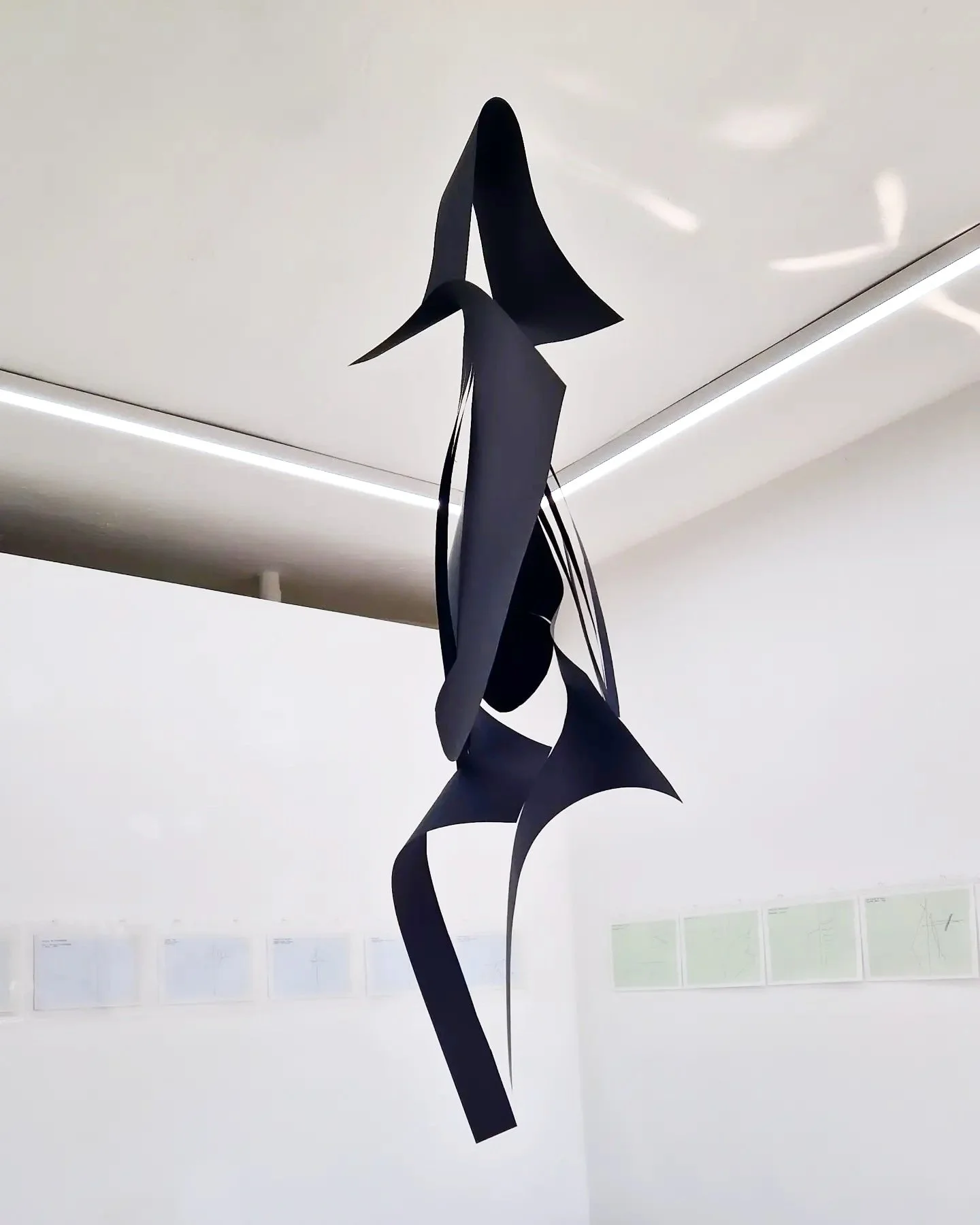
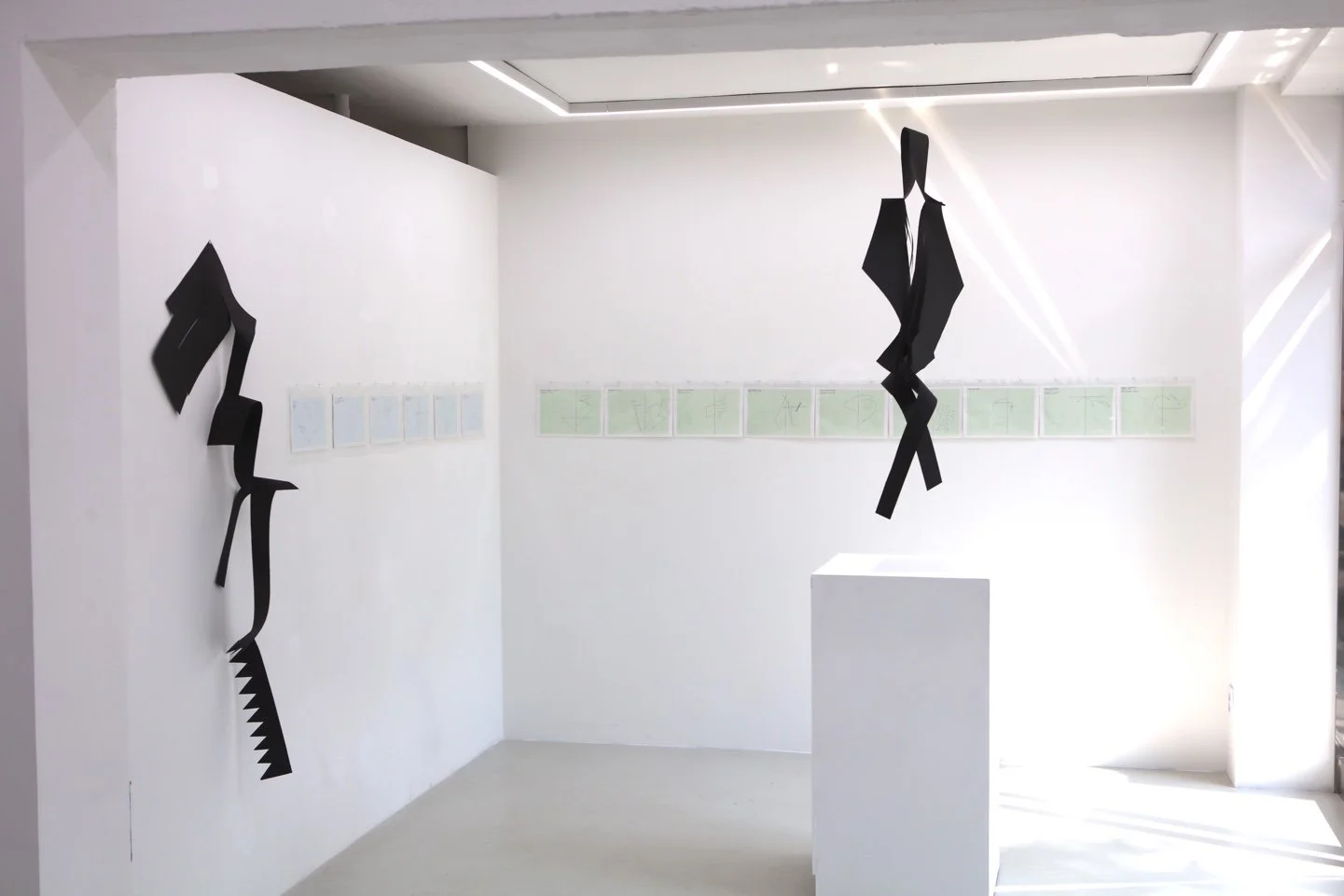
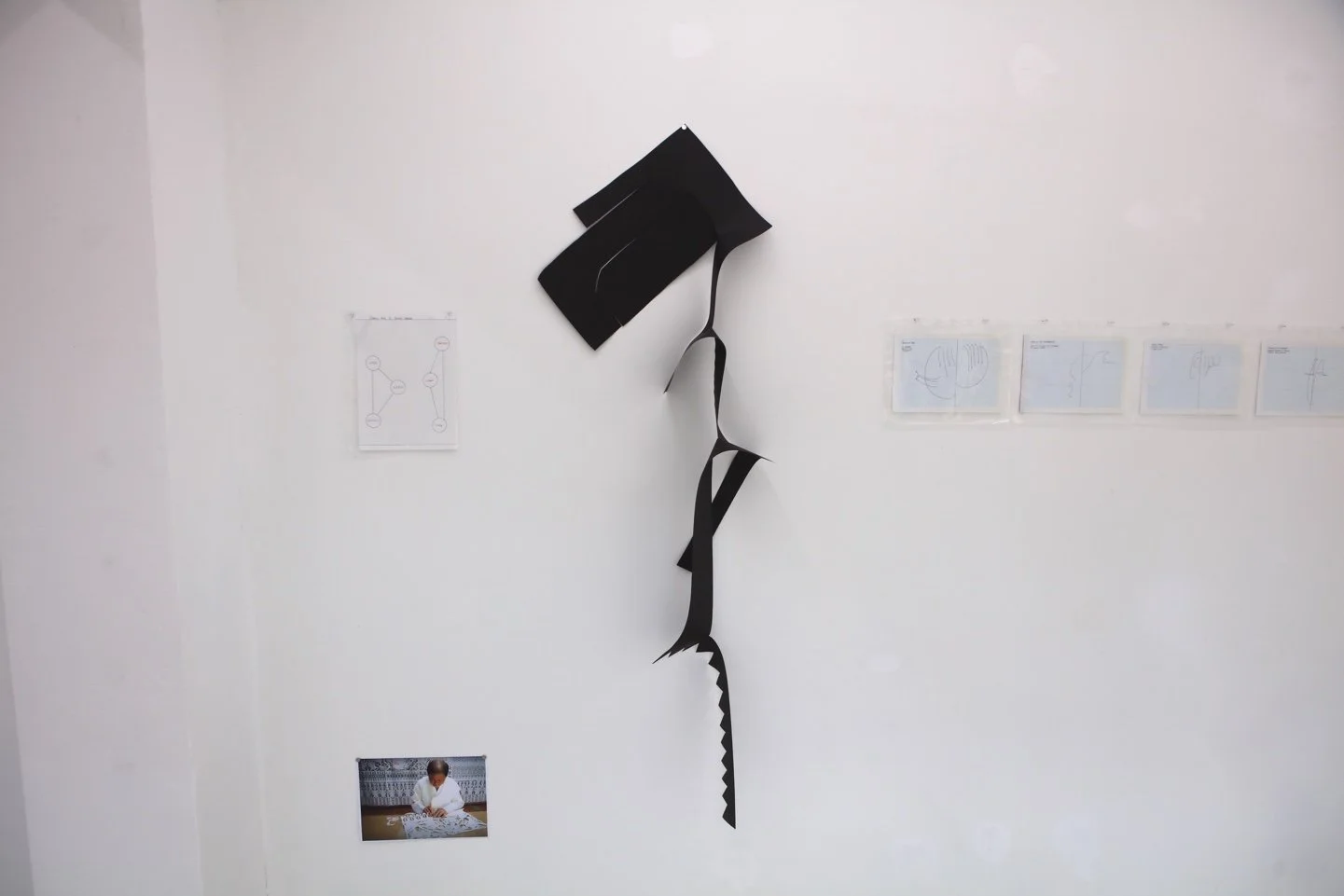
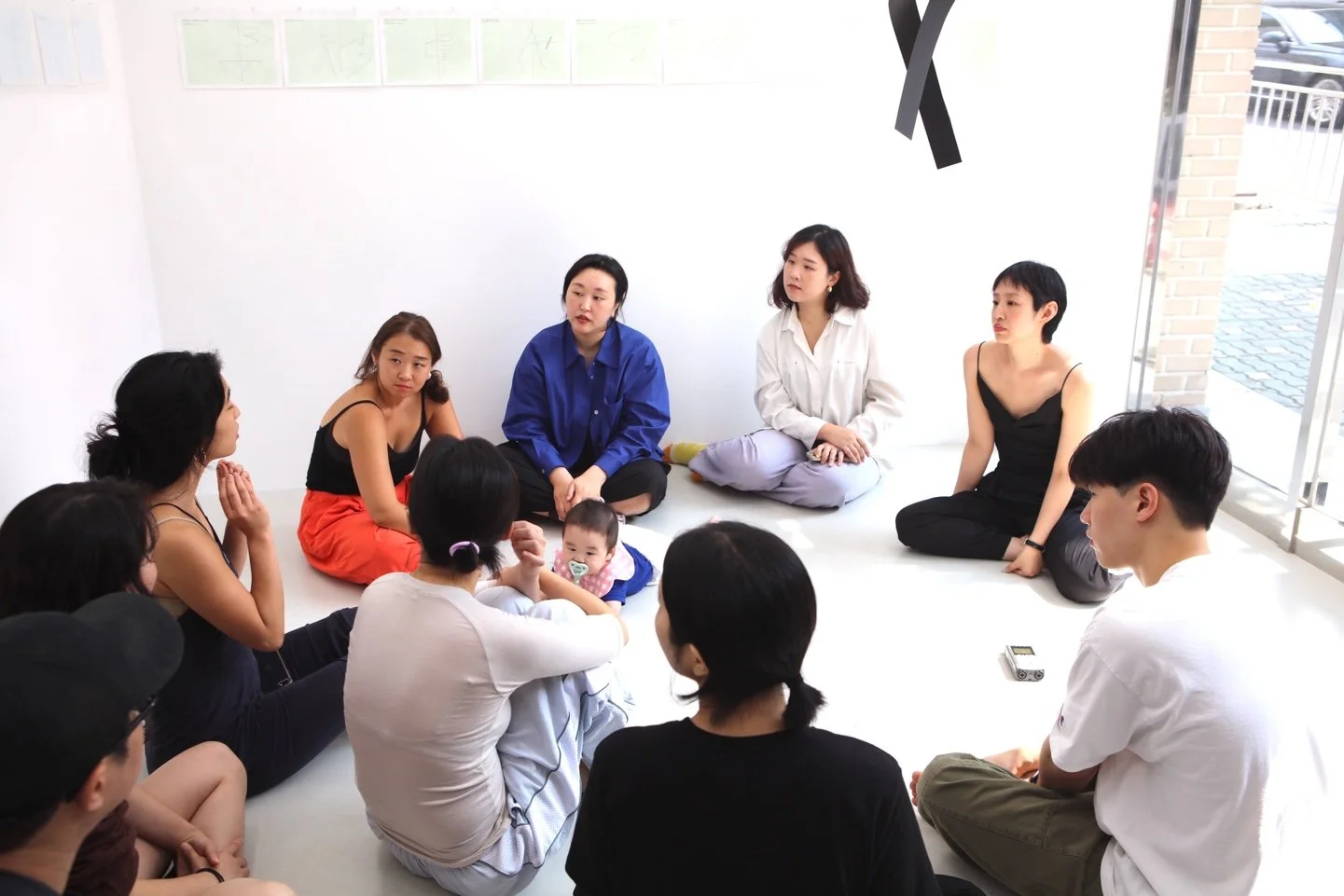
The Attempt of a Hug, 2024, Black construction paper
Supported by the Akademie Schloss Solitude, Stuttgart; forever gallery, Seoul.


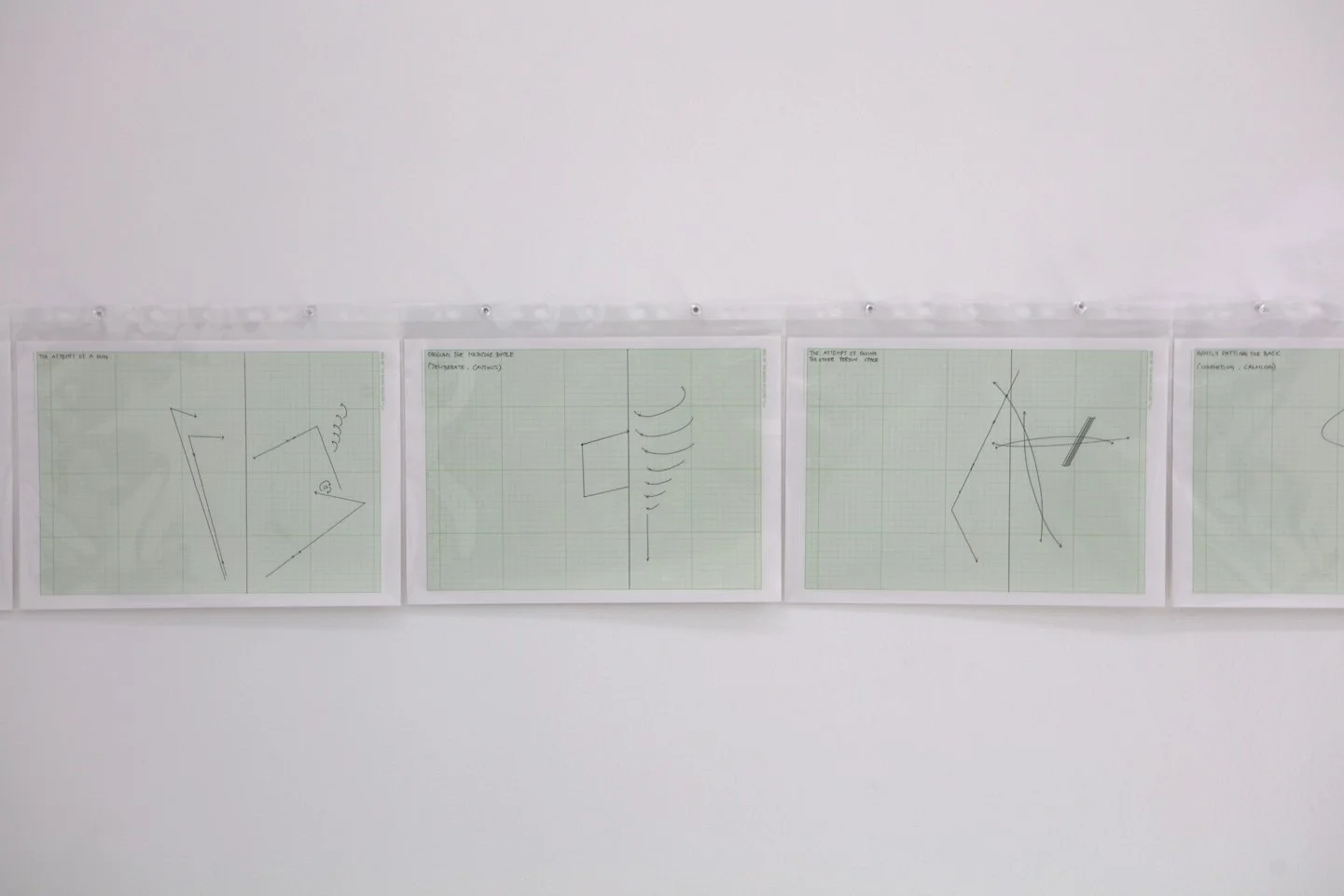
Sound Dance Notation Drawings (Studies on Touch I), 2024, 8,5 in x 15 in, movement notation on grid vellum paper (set of 16)
Supported by the Akademie Schloss Solitude, Stuttgart; forever gallery, Seoul.
Sound Dance (2024-ongoing) is a growing archive of gestures collected during a period of illness and paralysis, when my body became dependent on the intimate care labor of others. The work gathers the small, sustaining movements that keep a sick body alive — gestures of tucking, lifting, brushing hair, holding, stabilizing, or reaching out. These micro-actions, usually unrecorded and culturally invisible, form a personal data culture of care: movements that carry emotional, social, and ethical information but rarely enter public narratives or institutional frameworks. Sound Dance treats these gestures as embodied data units — fragments of relational knowledge generated within moments of vulnerability, interdependence, and survival. Sound Dance is part of the umbrella research project titled “Studies on Touch”.
Each gesture is translated into a set of score drawings and kinetic paper sculptures. The drawings distill the gestures into lines, directions, weights, temperature, tempo, and textures, while the sculptural forms emerge through folding and cutting processes inspired by paper folding and cutting ritual of Korean shamans. In shamanic practice, these fragile paper forms are hung in domestic or ritual spaces to house benevolent spirits and repel harmful forces. Reworking this tradition, Sound Dance reimagines choreography as a contemporary method of spiritual and social tending — a way to organize movement so that it protects, holds, and rebalances the body in times of instability.
By assembling an inventory of care-based gestures, the work proposes that choreography can function as an alternative knowledge system: a means of preserving forms of intimate labor that circulate beneath the threshold of public visibility, and a way of giving material and spatial form to the otherwise ephemeral movements that accompany illness, healing, and relational endurance. In this sense, Sound Dance becomes both an archive and a sanctuary — a place where the subtle, unrecognized gestures of survival are recorded, honored, and allowed to resonate beyond the private sphere.
The image is from an installation during New Suns Open Studio program at forever gallery, Seoul